
In London space availability can be constrained, so we must be careful while choosing trees for our tiny gardens. Here is a list of some of our favourite trees that would fit nicely in a small, cosy area.
- Olive tree

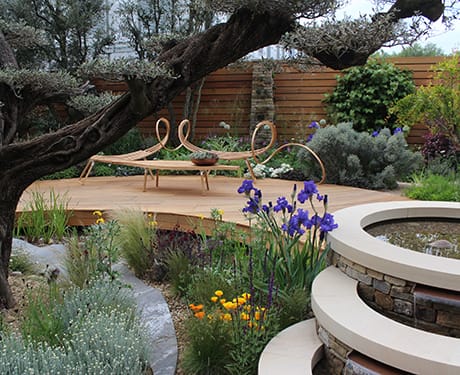
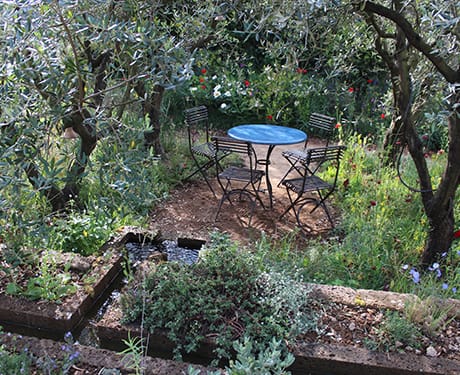
This Mediterranean species can flourish in the unique microclimate of London, giving our yard a wonderful silver leaf holiday feel. Can be planted in a border where it will grow somewhat taller or utilised in containers where we can mould the crown into a globose shape. To keep it in the appropriate shape, we must monitor it and prune it frequently.

- Specimen Acers

These trees are among the most adored of all since they stay tiny, have a lovely shape, and have magnificent autumn leaf colour.
The Acer palmatum-Japanese maple cultivars, such as “Bloodgood,” “Sango-Kaku,” and “Osakazuki,” are the most popular ones.
- Multistem Juneberry trees

An edible fruit-bearing tree that will thrill you in every season: the winter’s smooth silver-brown branches, spring’s fragrant white blooms, summer’s delicious berries that will draw birds to your garden, and autumn’s stunning red leaf colour.

- Dwarf Beech tree
Southern England is home to endemic Fagus sylvatica species, which can naturally reach heights of 35 metres. If you are genuinely interested in these trees, however, you can have a dwarf species in your garden; your best options are Fagus sylvatica ‘Purpurea Nana’ or Fagus sylvatica ‘Asterix.
- Smoke tree

One of the trees with the nicest autumnal colour. The best purple cultivars for Cotinus coggygrya are “Royal Purple” and “Flame,” while there are many other purple variants available. Also, you can train them to grow into miniature shrubs or trees.
- Birch trees

Not many tree can rival with the white bark of the Betula species. Despite the fact that these trees can get rather tall, their loose, light foliage makes them the ideal tree when we need some dappled shade. A border can be beautifully rhythmic and framed by a row of Betula trees.

- Judas tree
Cercis siliquastrum is yet another little, Mediterranean, and highly decorative tree. Cauliflory is a botanical phenomena in which flowers are formed on the tree trunk and ancient brachnes.
- Multistem Crab Apples

Another delicious tree with several stems that would look beautiful in a border, especially with decorative grasses. While the blossoms require bees and butterflies to be pollinated and the fruit is a favourite food source for songbirds, the crab apples will attract wildlife to the garden. They must be boiled and sweetened, much like a jelly or jam, before being consumed by people. a jelly or jam.

- Portugal Laurel
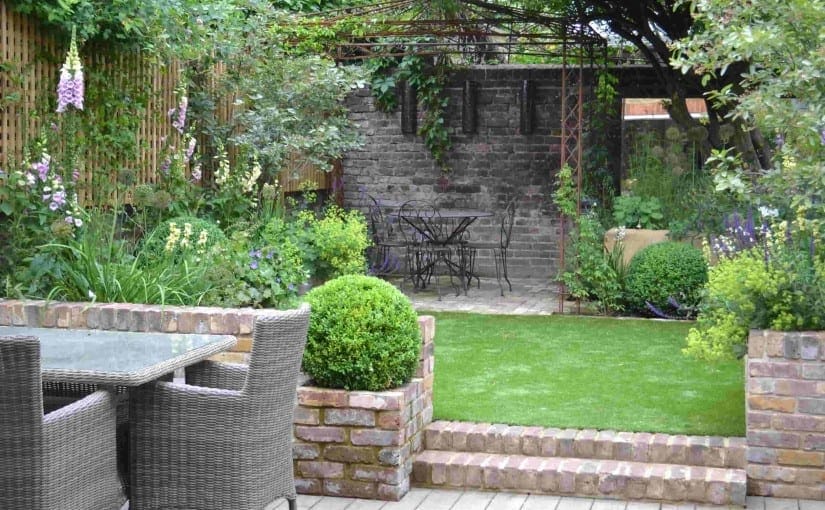
The Prunus lusitanica ‘Angustifolia’ is the best tree for crown screening since the leaves begins at 1.8 m high, which provides the ideal amount of concealment from prying eyes.

- Tree ferns

These tree ferns, which are native to Eastern Australia yet thrive in London’s climate, are a necessity for an exotic-themed garden.
They appear particularly attractive when dimly lighted by accent lights.
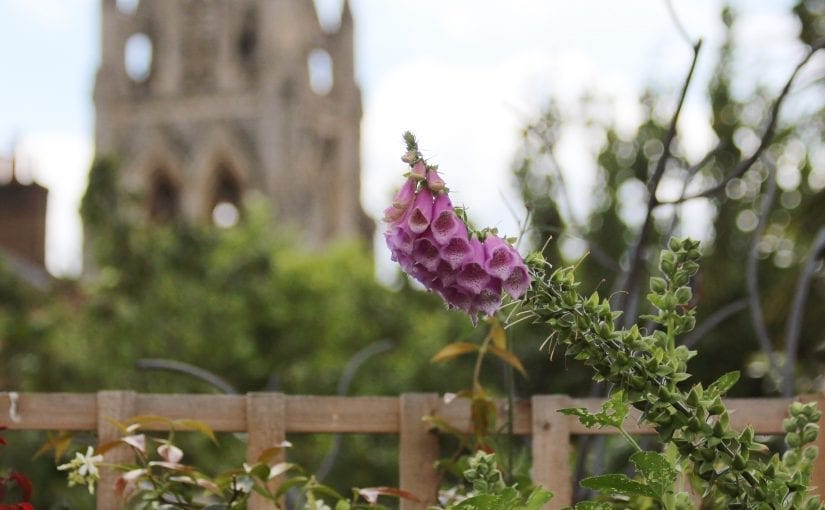

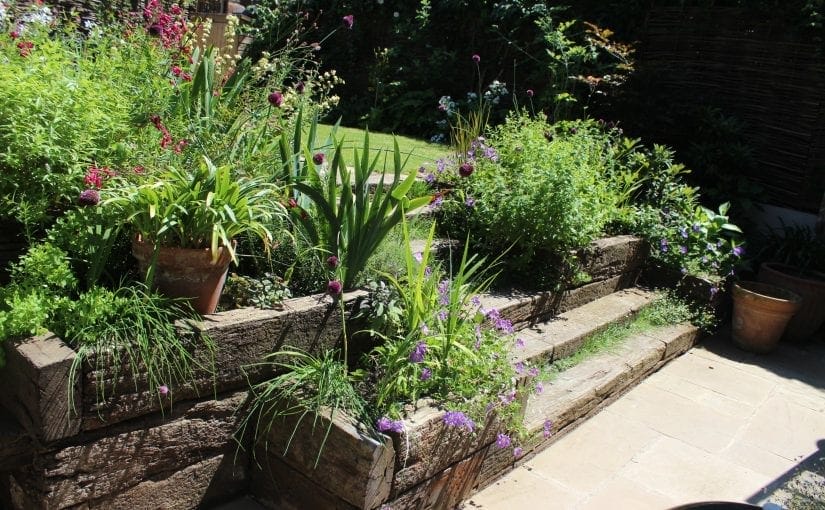
 Some of the most beautiful perennials, like Digitalis and Acanthus, were likely inspired by the idea that if you want to be noticed, you have to stand out. Spiky flowers can add a pop of colour where it’s needed most, but their blooming time is usually brief, so it’s important to space them out across the year. Bulbs, such as the purple Alliums commonly used in this context, are another smart choice for filling in empty spots in a border.


 One of the most popular colour combinations for a border is purple and white because it is sophisticated yet striking. More tones, like pinks or light blues, will only add to the harmony.


 Here’s where your skills in plant arrangement really come into play: if two plants bloom at the same time, you should place them next to each other in plants of the same colour. Flowers such as astrantia and sisyrinchium, campanula and alchemilla, echinacea and sage, and so on. Make up your own unique colour schemes and experiment with different flower designs.


 In most cases, cultivated varieties of popular garden plants originated from the corresponding wild ancestors. Perennials from your local meadow or forest can be a great choice for your garden because they are low maintenance and spread quickly by self-seeding. Flowers like boragos, wild geraniums, chamomiles, and forget-me-nots make lovely filler for borders.

 In order to ensure that a certain colour is always present in your border, it is important to stock up on a wide variety of plant species that share your preferred hue. For instance, when the Centranthus ruber begins to produce seeds, the Penstemon ‘Garnet,’ another species with a similarly coloured flower, opens its lovely bell-shaped flowering, bringing the same tones into the mix with a little overlap in timing.





 This is a designer favourite that will always be in style. You can add some evergreen climbing jasmines for foliage and fragrance or, if you’re holding the screening on a rooftop terrace, remove the viewing windows.