
Using vivid flowers in your garden design is one of the greatest things you can do because they give your borders life and draw bees and butterflies. Our selection consists of the floweriest cultivars that, whether they are grown in a border or a container, will keep you interested in colour throughout time.

-
Libertia grandiflora

An indigenous plant species from New Zealand that thrived in London and other parts of the UK. a grass-like perennial that forms clumps and has tall white flowers and berries that last all winter. needs a bright, protected area in order to thrive in the event of a frost.


-
Salvia nemorosa ‘Caradonna’
This perennial favorite’s spiky purple blossoms will add spice to any garden setting. Balkan clary will continue to produce new flowers if consistently deadheaded and placed in a sunny area. Part shadow is also acceptable, but it won’t be as active.

-
Agapanthus africanus

The African lily is a perennial with summer blooms, although it has year-round foliage. It will survive in the shade but won’t grow any blossoms. It enjoys acidic soil and full sun.
-
Erysimum ‘Bowles’s Mauve’

One of our favourite wallflowers, this plant will flower pretty much all year around if you keep pruning back the dead flower heads. It is a bushy, evergreen plant with a wooden base that needs enough of sunlight for its profusion of blossoms. For roof-top containers, it works just fine.

-
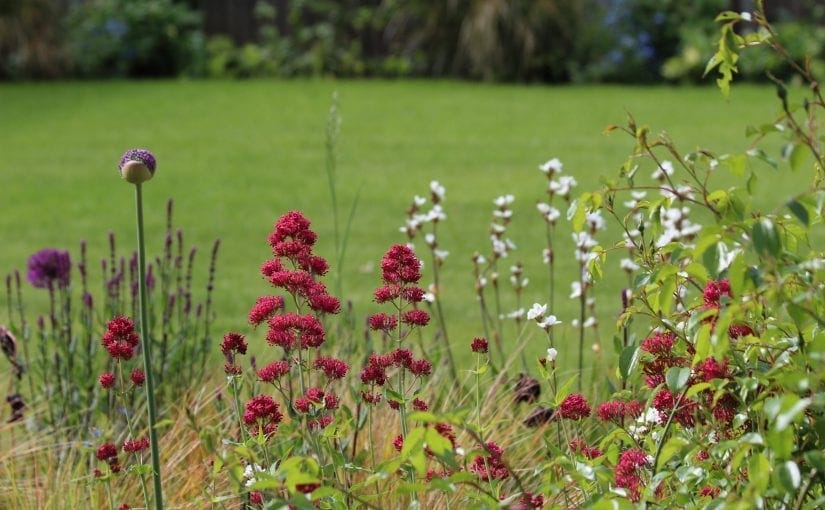
Centranthus ruber

A Mediterranean species with faintly aromatic flowers is the red valerian. If you allow it, this semi-evergreen plant with a wooden foundation will readily self-seed in your garden. To avoid it getting invasive, trim down the flower-head in late July before they set seeds.
-
Geranium ‘Rozanne’

One of the best trailing plants for gardens; great for raised beds made of repurposed brick or wood. It is a perennial that spreads quickly. Its extended flowering season lasts from early summer to late October. It thrives in the majority of soil types and even blooms in partial shade.


-
Verbena bonariensis
The Argentine vervain, which can grow up to 2.5 metres tall, is one of the tallest perennials you can buy for a garden. Bees adore its clusters of purple blooms, but you can only enjoy them if you cut this hardy perennial back each year and continue to deadhead it as well.

-
Alchemilla mollis
Another excellent ground cover and trailing plant that works great in raised beds. The greatest part of the lady’s mantle is its somewhat hairy, soft-green foliage, which possesses dewetting characteristics and holds on to the water droplets like tiny pearls. It also blooms during the summer with pale yellow flowers.

-
Nepeta x faassenii
Although it has wonderful smelling silver-green leaves, this garden cat mint is not the real cat mint and won’t drive your cats or the cats of your neighbours insane. The violet flowers appear during the Summer, and if kept deadheaded will stay on until late Autumn.

-
Erigeron karvinskianus
The tenth and final member of this list is perennial, which blooms from early spring through late autumn. It makes a beautiful sunny ground cover and can survive in any type of soil. The Mexican fleabane forms a continuous mat throughout its growing season and contains daisy-like white flower heads. It prefers direct sunlight and cannot thrive in clay soil.

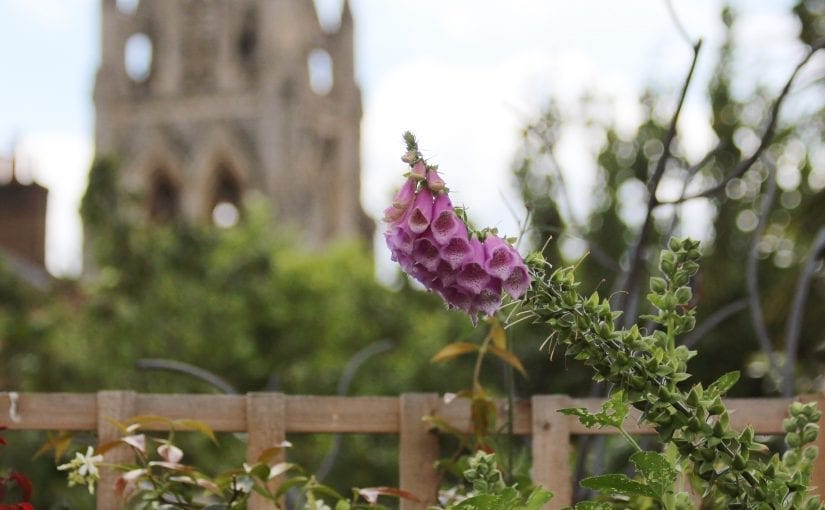

 Some of the most beautiful perennials, like Digitalis and Acanthus, were likely inspired by the idea that if you want to be noticed, you have to stand out. Spiky flowers can add a pop of colour where it’s needed most, but their blooming time is usually brief, so it’s important to space them out across the year. Bulbs, such as the purple Alliums commonly used in this context, are another smart choice for filling in empty spots in a border.


 One of the most popular colour combinations for a border is purple and white because it is sophisticated yet striking. More tones, like pinks or light blues, will only add to the harmony.


 Here’s where your skills in plant arrangement really come into play: if two plants bloom at the same time, you should place them next to each other in plants of the same colour. Flowers such as astrantia and sisyrinchium, campanula and alchemilla, echinacea and sage, and so on. Make up your own unique colour schemes and experiment with different flower designs.


 In most cases, cultivated varieties of popular garden plants originated from the corresponding wild ancestors. Perennials from your local meadow or forest can be a great choice for your garden because they are low maintenance and spread quickly by self-seeding. Flowers like boragos, wild geraniums, chamomiles, and forget-me-nots make lovely filler for borders.

 In order to ensure that a certain colour is always present in your border, it is important to stock up on a wide variety of plant species that share your preferred hue. For instance, when the Centranthus ruber begins to produce seeds, the Penstemon ‘Garnet,’ another species with a similarly coloured flower, opens its lovely bell-shaped flowering, bringing the same tones into the mix with a little overlap in timing.


